
Planning for emergencies IS the job of government
When federal funding for healthcare, school meals and childcare was slashed by the Trump administration in order to fund their billionaire tax cut, our state government stepped in to protect vulnerable Connecticut residents. Not only was it the right thing to do, it comes at a time when Connecticut is running a $400 million surplus, and the exact reason that, in 2025, the state created a $500 million emergency response fund that keeps Connecticut’s essential services running when federal money dries up.
But not everyone agreed that helping our most vulnerable was a good idea.
Even though the emergency measure passed 126-20 in the House and 27-8 in the Senate, a tiny Scrooge minority voted NO, including Greenwich’s own representatives — Ryan Fazio and Tina Courpas. In a recent mailing, Courpas decried the emergency lifeline as a “slush fund” and questioned whether there was even an emergency to respond to.
The fund was designed as a flexible response to federal cuts and policy changes already underway or expected to hit Connecticut. Rather than wait until residents lost healthcare, housing, child care and food assistance, the state planned ahead.
And the emergency did arrive
The “One Big Beautiful Bill Act” allowed federal healthcare premiums to expire at the end of 2025, leading to sharp increases for people buying insurance through Access Health CT. Connecticut estimated the loss of federal subsidies at roughly $295 million.
The federal budget also placed substantial barriers to SNAP eligibility. To prevent residents from going hungry, Connecticut subsequently had to spend money to make up the difference for reductions in federal support for Medicaid, unemployment assistance, and research grants.
Connecticut government stepped into the breach and acted, no thanks to Ryan Fazio and Tina Courpas.
How was the emergency fund spent?
The first two rounds of $169 million reduced health-insurance costs for more than 150,000 people, provided food assistance for over 35,000 people and kept roughly 3,500 people housed. “People are losing food right now,” said Garth Harries,president and CEO of the Connecticut Project Action Fund. “We cannot food-bank our way out of this crisis.”
Additional state funding in 2026 included:
- $22.5 million to Connecticut dairy farms
- $21 million to UCONN
- $17.5 million for Connecticut’s unemployment insurance program
Farmer Art Spielman attributed the emergency funding to saving his 5th generation dairy farm.
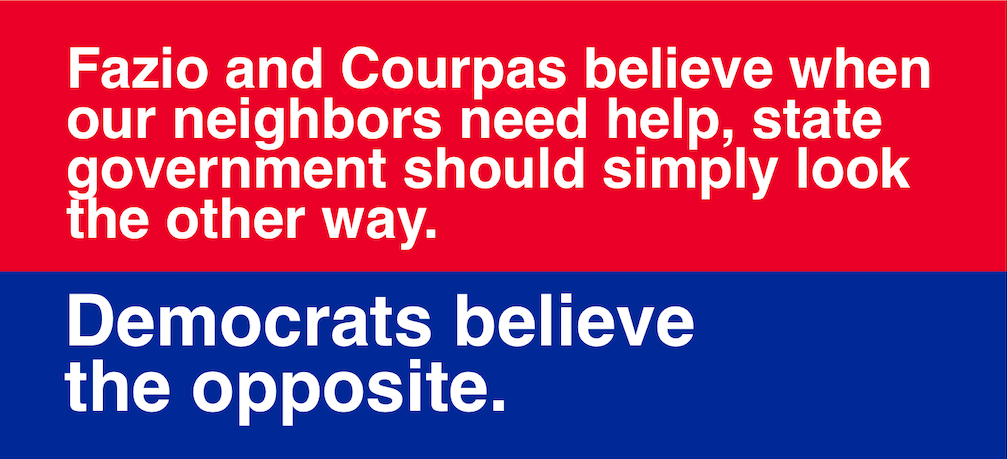
Fazio and Courpas’ votes against the emergency response fund are a statement of their values: that when our neighbors lose food assistance, health coverage, housing or livelihoods, state government should simply look the other way.
Democrats, including Governor Lamont and the Democratic-led legislature, believe the opposite: When the federal government abandons Connecticut families to help pay for tax cuts for billionaires and the wealthy, state government must step in. By using Connecticut’s fiscal strength to protect people from very real harm, that is exactly what they did.
We applaud them for planning ahead, acting in an emergency, and remembering that a strong state does not leave its people behind.
A new era for Central Middle School
Monday’s ribbon cutting at the new Central Middle School (CMS) is a milestone for Greenwich — and a day worth celebrating.
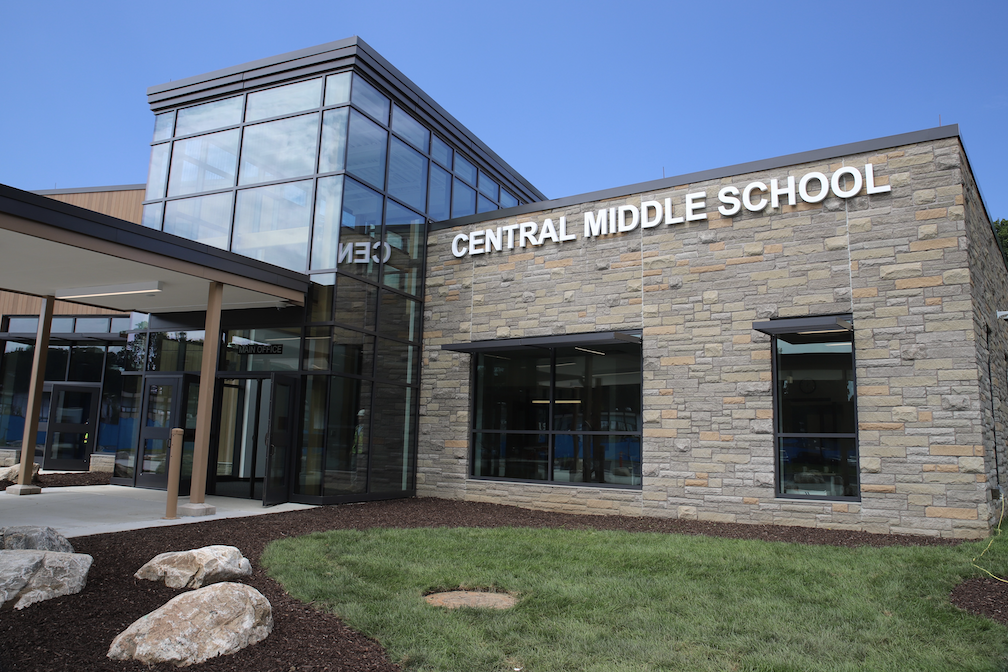
CMS students will be starting the school year in a beautiful, state-of-the-art building designed for the way students learn today. It features bright, collaborative learning spaces, modern science classrooms, improved athletic and performing arts facilities, and enhanced safety and security.
It’s also an investment in sustainability, with energy-efficient systems designed to reduce energy use and operating costs, a planned rooftop solar array, and a healthier, more comfortable learning environment.
How we got here
The path wasn’t easy. In February 2022, the 64-year-old CMS building was temporarily closed after the structure was deemed “dangerous and unsafe for human occupancy.”
Replacing the school became an urgent priority for the community. Yet when a critical appropriation came before the Board of Estimate and Taxation (BET) in October 2023, Republican members Harry Fisher, Leslie Tarkington and Nisha Arora abstained and Karen Fassuliotis voted against. But with consistent support from all six BET Democrats, joined by two Republicans who were not seeking reelection, the CMS funding was approved, allowing design and construction to proceed.
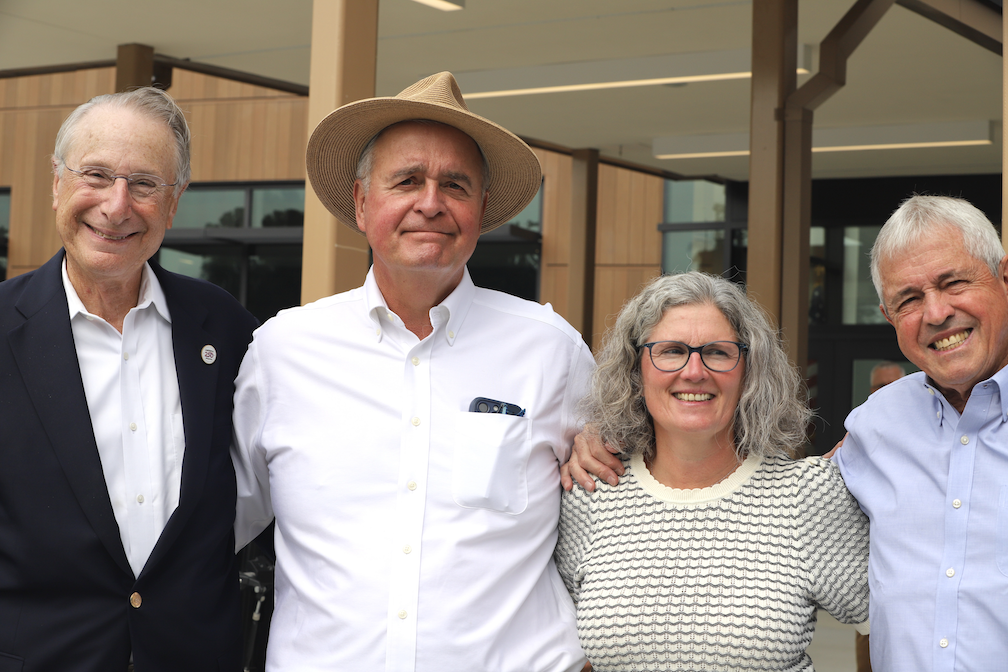
The project also received a major boost from State Reps. Hector Arzeno, Steve Meskers and Rachel Khanna, who secured approximately $14.7 million more in state reimbursement than initially expected.
Less than two years after the 2024 groundbreaking, the community gathered this week to cut the ribbon on a new school that will serve generations of students.
Most of all, we celebrate and thank the Board of Education, Greenwich Public Schools teachers, administrators and staff, the design and construction teams, and the dedicated volunteers of the Central Middle School Building Committee whose efforts made this day a reality. The new CMS is an investment in our students, in public education, and Greenwich’s bright future.
What we’re reading
You may have heard about various attempts by the Trump administration to control who gets a mail-in ballot this coming Election Day. The New York Times reports the U.S. Postal Service has introduced a restrictive new rule that treats ballots like hazardous materials and refuses to deliver to anyone whose name is not on a federal registry of voters. The Supreme Court ruled the president’s executive order could stand for now.
Connecticut Attorney General William Tong has joined 25 other states to challenge the new rule in court.
Our advice? Instead of reading and weeping, read and vote! Attempts at voter suppression efforts will only work if we stay home.
Are you subscribed yet to Selectwoman Rachel Khanna’s newsletter? Here’s the link to the latest issue.
Action Calendar
September 2. Sustain.
The Foodshed Network invites you to attend a forum on Localizing Food in Connecticut, featuring remarks by Bryan Hurlburt, commissioner of agriculture. Registration is required. 6:30-8:30 p.m., North Greenwich Congregational Church, 606 Riversville Rd.
September 11. Remember.
Gather for 25th Anniversary Remembrance ceremonies honoring the victims of that fateful day when Greenwich lost 32 of its own:
- 8:30-10:30 a.m., Cos Cob Park, 22 Sound Shore Drive
- 6:30 p.m., Glenville Firehouse, 266 Glenville Road
September 11. Coffee with Khanna.

September 13. Campaign kickoff picnic.
For an afternoon of food, conversation, and community, meet local, state and federal leaders, connect with neighbors, and help us build critical momentum for the upcoming election. Click here to sign up and purchase tickets. 12 noon–3 p.m., Clambake Area, Greenwich Point Park, Old Greenwich.
September 23. Learn.
Join a conversation with Secretary of the State Stephanie Thomas to learn the latest on voting in Connecticut 4-5 p.m., Greenwich Town Hall Meeting Room.
| Volume 5, Number 9 • August 27, 2026 |
| Paid for by the Greenwich Democratic Town Committee. |
| Greenwich Democratic Town Committee P.O. Box 126 Greenwich, CT 06836 |