
Limiting speed is the difference between life and death
Traffic and pedestrian safety have consistently ranked among the greatest concerns for Greenwich residents—and for good reason. A 2025 town-sponsored street safety study found that between 2019 and 2023 there were 722 injury crashes in Greenwich. Of those, 43 crashes (6%) resulted in fatalities or severe injuries.
As a result, the Greenwich Police Department, in conjunction with the Town of Greenwich, has launched a school zone speed enforcement program using automated speed cameras at selected school locations.
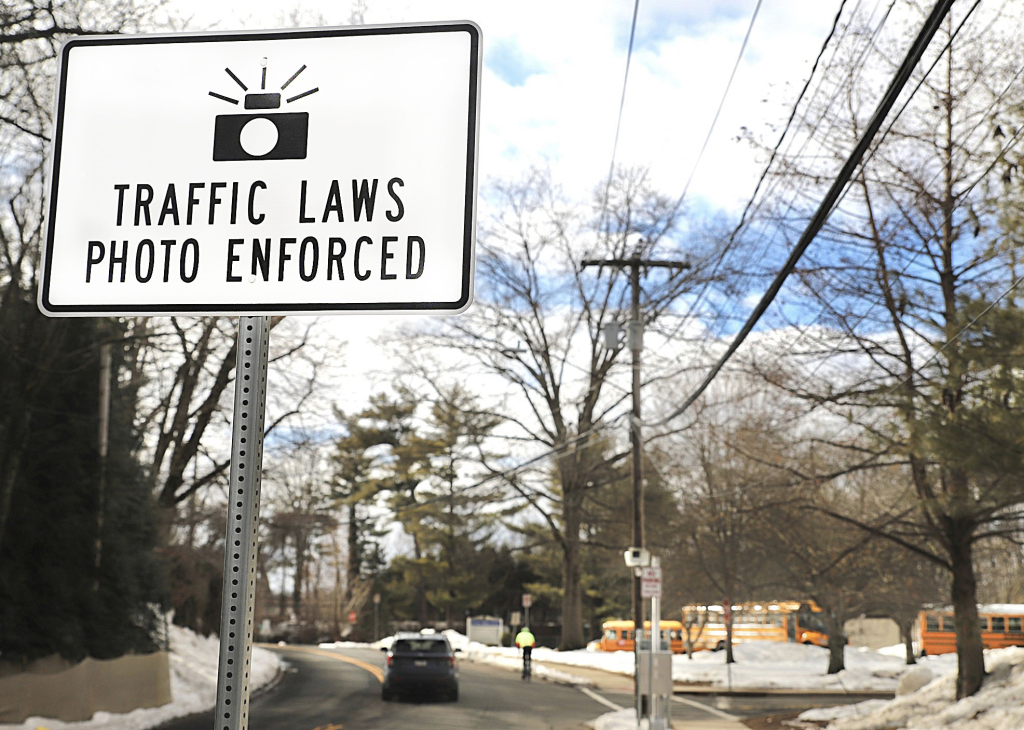
Speed enforcement in front of Central Middle School
Why school zones?
Statistics from the Safe Streets Greenwich study showed that accidents resulting in fatalities or severe injuries are three times more likely to happen in or near school zones. In fact, a disproportionate number of these accidents happens within 100 feet of school zones. This is where children and families are most vulnerable. And this is where speed monitoring is most needed.
The statistics are alarming. Greenwich Police point out that during a traffic study, 44,208 vehicles a week sped through school zones. Based on 20 mph school speed zones:
- 64% of the violators were driving 31-34 mph (11-14 mph over the limit). Statistics show a 50% pedestrian survival rate at these speeds.
- 30% of speeders were driving 35-40 mph (15-20 mph over the limit). Only 10% of pedestrians hit at these speeds survive.
In school zones filled with children walking, biking, and crossing streets, reducing speeding can easily mean the difference between life and death.
Where and when cameras operate
The cameras are located at specific school zones throughout town. A full list of locations is available here.
The cameras operate only on days when school is in session and when school-zone beacons are flashing and at times when children are most likely to be outdoors and using crosswalks and sidewalks. Exact times are here.
A resounding success
According to Greenwich Police Chief James Heavey in his presentation to the Board of Estimate and Taxation on February 19, the results have been significant. Eight of the nine locations showed a 90% reduction in speeding.
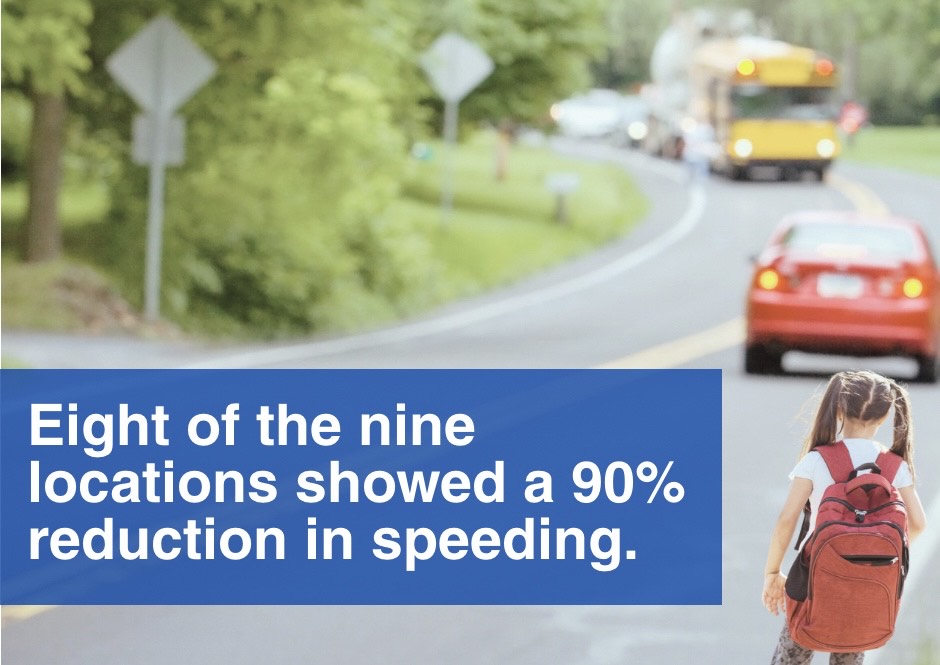
This is a huge improvement and is a giant step towards keeping our children safe.
Fine revenue is used for continued street safety
While some residents have raised concerns about the number of citations, the Police Department has emphasized that the purpose is compliance and safety—not revenue generation.
Selectwoman Rachel Khanna made this clear: “This is a safety-first program. It is designed to protect our children.”
Some skeptics have speculated that money collected from fines will go into the town’s general operating budget. This is not true.
All revenue generated by fines remaining after paying the equipment vendor is strictly earmarked to support traffic safety education, engineering, and enforcement.
A long-term investment in safer streets
Early data point to a clear outcome: Drivers are slowing down in school zones. Ultimately, the program is about protecting children and reinforcing safe driving habits across the community. When vehicles slow from 30 mph to 20 mph, survivability nearly doubles. Slowing down saves lives.
By initiating the school zone speed monitoring program, the Town of Greenwich and the Greenwich Police Department have taken a significant step toward achieving greater traffic and pedestrian safety.
Governor’s plan targets police staffing shortages
Like many communities across Connecticut and the country, Greenwich has struggled in recent years to recruit and retain police officers. In 2025, the Greenwich police department employed 12 fewer sworn officers than authorized, according to a February 19 presentation to the Board of Estimate and Taxation. The high cost of living and shortage of housing in our area have been major obstacles to attracting new recruits.
Governor Ned Lamont is proposing legislation aimed at easing those obstacles and strengthening the state’s public safety workforce. The proposal, now headed to the Connecticut General Assembly, would establish two new incentives for state and local police officers and firefighters to boost recruitment and improve retention.
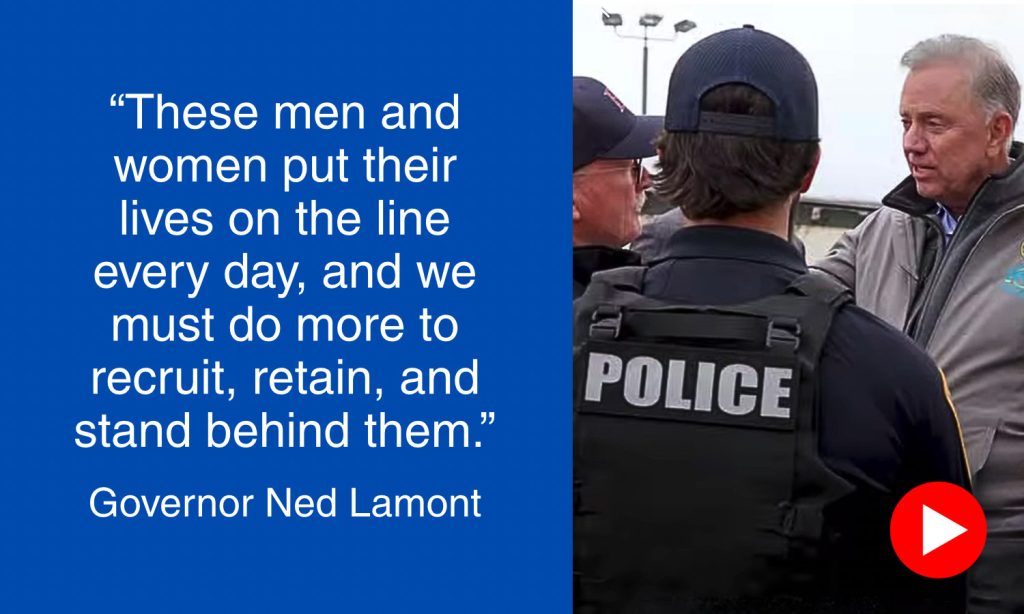
First, officers and firefighters with five or more years of service would be eligible for a waiver of tuition and fees at Connecticut’s public colleges and universities, covering both undergraduate and graduate programs. Second, the bill would create a mortgage assistance program to help first responders purchase homes in the communities they serve.
“Police officers and firefighters are the backbone of the safety of our neighborhoods,” Lamont said in announcing the proposal, adding that strategic recruitment and retention policies are essential to maintaining strong, fully staffed public safety departments. The incentives could make a meaningful difference in Greenwich, where affordability remains one of the biggest barriers to building and keeping a robust police force.
What we’re watching
In the Democratic response to the State of the Union address this week, Virginia Governor Abigail Spanberger asked three pointed questions: Is the president working to make life more affordable for you and your family? Is the president working to keep Americans safe both at home and abroad? Is the president working for you? She concisely spelled out how the answer to each question is no.
“In his farewell address, George Washington warned us about the possibility of ‘cunning, ambitious, and unprincipled men rising to power,’” Spanberger asserted in her conclusion. “But he also encouraged us, all Americans, to unite in a common cause to move this nation forward. That is our charge once more. And that is what we are seeing across the country. It is deeply American and patriotic to do so.”
Action Calendar
March 3. Learn.
Register for insights on accessibility, inclusion and community-wide transportation from Call-A-Ride, Share-the-Fare Program, Compassionate Companions Program, Norwalk Transit District and the Transportation Association of Greenwich (TAG). At 6 p.m., Greenwich Library Marx Family Black Box Theater, 101 W. Putnam Ave.
March 6. Engage.
Join Selectwoman Rachel Khanna for coffee and conversation at Coffee for Good. Hear about what’s happening in town and bring your feedback and questions. 1 p.m., 48 Maple Ave.
March 11. Prepare.
Join Selectwoman Rachel Khanna to find out from CT Comptroller Sean Scanlon what Connecticut can do to prepare for changes to Medicare and Medicaid. Mazza Room (first floor), Greenwich Town Hall, 11 a.m., 101 Field Point Road.
| Volume 4, Number 35 • February 26, 2026 |
| Paid for by the Greenwich Democratic Town Committee. |
| Greenwich Democratic Town Committee P.O. Box 126 Greenwich, CT 06836 |